
FEATURED, by Road Safety at Work
Thursday, March 14, 2024
Spring weather may be in the forecast but your winter tires are still needed on the road.
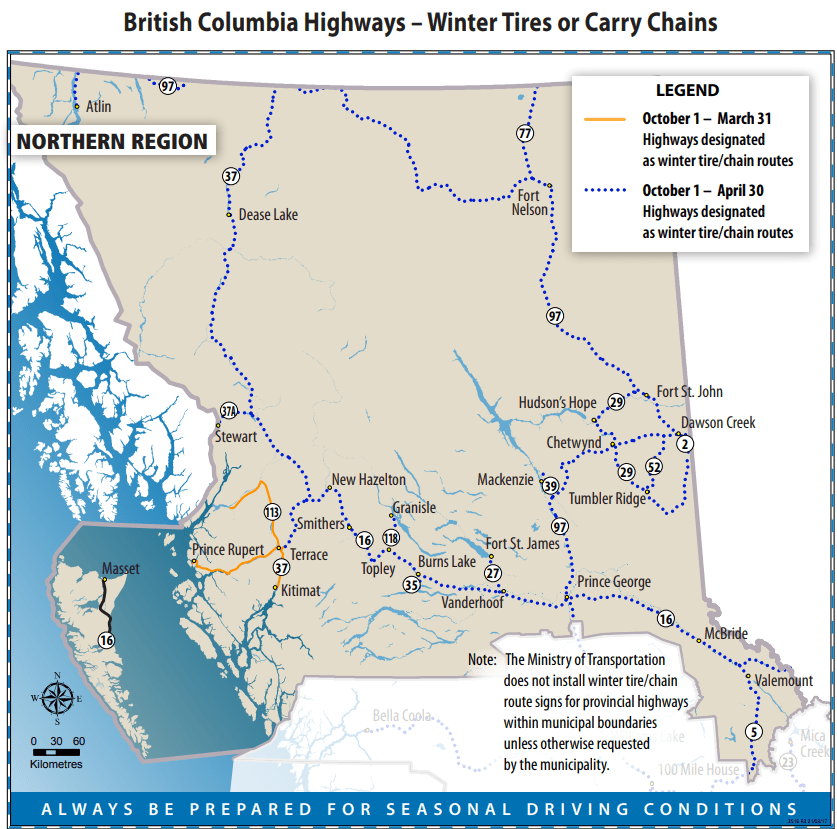
BC law requires winter tires or chains on many provincial highways around the Cariboo and Northern B.C. through March 31. For select highways located through mountain passes or high snowfall areas, the requirement extends until April 30.
“It’s about safety, not the season,” explains Trace Acres, program director for Road Safety at Work and spokesperson for its Shift into Winter awareness campaign. “Rain and cold nights are going to be with us for a while yet. Winter tires give you better traction and braking on wet roads when temperatures drop below 7C.”
Their softer rubber compound remains flexible in cold weather, which improves grip and handling. “Whether you’re driving for pleasure or for work, you want the best traction possible to help reduce the risk of crashing and seriously injuring yourself or your passengers,” Acres says.
Hundreds of thousands of British Columbians drive as part of their job. It may be the most dangerous thing they do during their workday, even if it’s only done part time or occasionally. Work-related crashes are the leading cause of traumatic workplace death in BC.
Employers are responsible for the safety of employees when they’re behind the wheel, which includes ensuring vehicles are equipped with winter tires or chains when required. Employees are required to follow their organization’s safe driving procedures.
Regardless of the season or reason for driving, a few basic safety rules can help prevent crashes:
- Know before you go. Check DriveBC.ca or your municipal website and other local reports for updated road and weather conditions. Avoid driving if possible when road and weather conditions are poor.
- Reduce speed, look ahead, and keep at least 4 seconds of distance between you and the car in front of you. “Give yourself lots of time and space to react,” Acres says.
- Watch for and slow down when approaching pooling water. You don’t know how deep puddles are, or the condition of the road beneath them.
- Keep your windshield washer fluid topped up and carry a spare jug. Spray from wet roads can reduce visibility.
- Check tire pressure monthly. It can fluctuate as temperatures rise or fall, which can affect braking distance, steering and handling.
“Whether it’s winter or spring, always drive for the conditions,” Acres says. “Adjust your driving in different weather, road, visibility, and traffic conditions to maintain full control of your vehicle.”
The Shift into Winter campaign is a joint provincial initiative supported by the Winter Driving Safety Alliance and managed by Road Safety at Work. For more information visit ShiftIntoWinter.ca
 PJXM Prince George