
FEATURED
Wednesday, October 25, 2023
Researchers have identified buried kimberlite, the rocky home of diamonds, by testing the DNA of microbes in the surface soil.
These ‘biological fingerprints’ can reveal what minerals are buried tens of metres below the earth’s surface without having to drill. The researchers believe it is the first use of modern DNA sequencing of microbial communities in the search for buried minerals.
The research published this week in Nature Communications Earth and Environment represents a new tool for mineral exploration, where a full toolbox could save prospectors time and a lot of money, says co-author Bianca Iulianella Phillips, a doctoral candidate at UBC’s department of earth, ocean and atmospheric sciences (EOAS).
The technique adds to the relatively limited number of tools that help find buried ore, including initial scans of the ground and analysis of elements in the overlying rock.
“This technique was born from a necessity to see through the earth with greater sensitivity and resolution, and it has the potential to be used where other techniques aren’t working,” said Phillips.
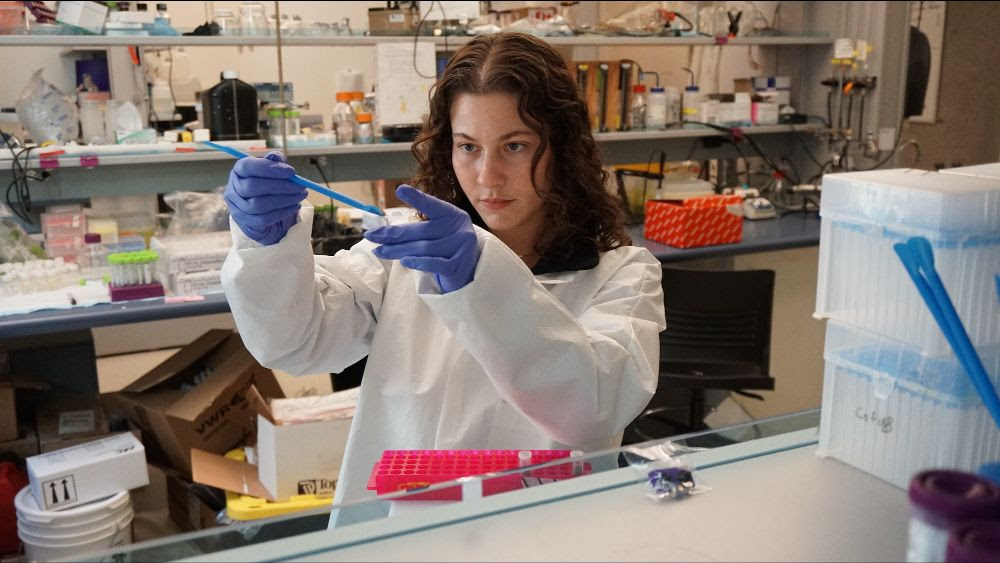
When ore interacts with soil, it changes the communities of microbes in the soil. The researchers tested this in the lab, introducing kimberlite to soil microbes and watching how they changed in number and species.
“We took those changed communities of microbes as indicators for the presence of ore materials, or biological fingerprints in the soil of buried mineral deposits,” said Phillips.
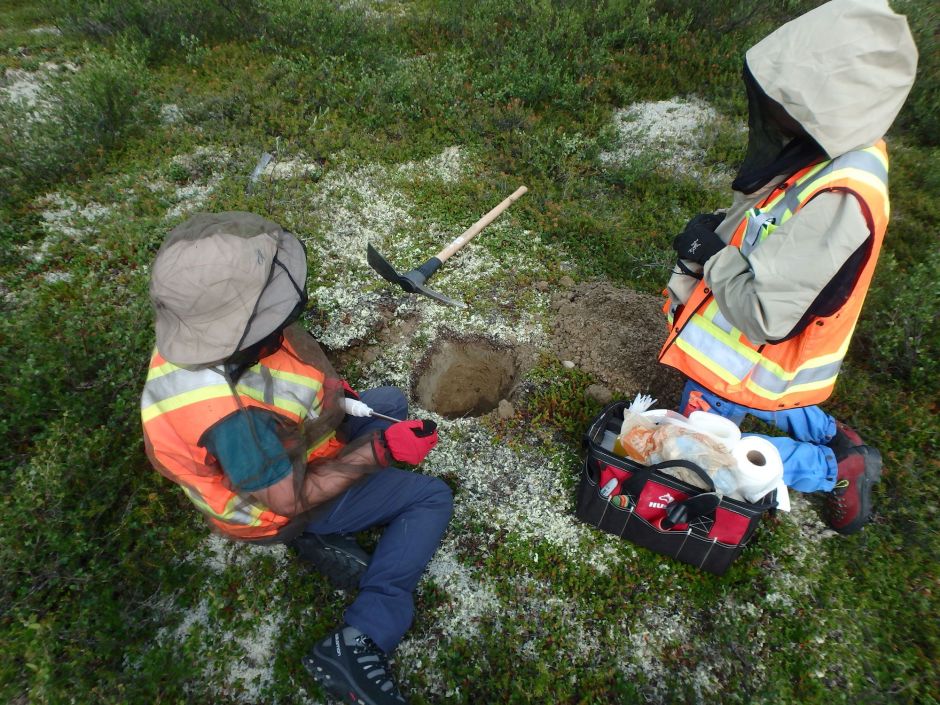
Using these ‘indicator’ microbes and their DNA sequences, the team tested the surface soil at an exploration site in the Northwest Territories where kimberlite had previously been confirmed through drilling. They found 59 of the 65 indicators were present in the soil, with 19 present in high numbers directly above the buried ore. They also identified new indicator microbes to add to their set.
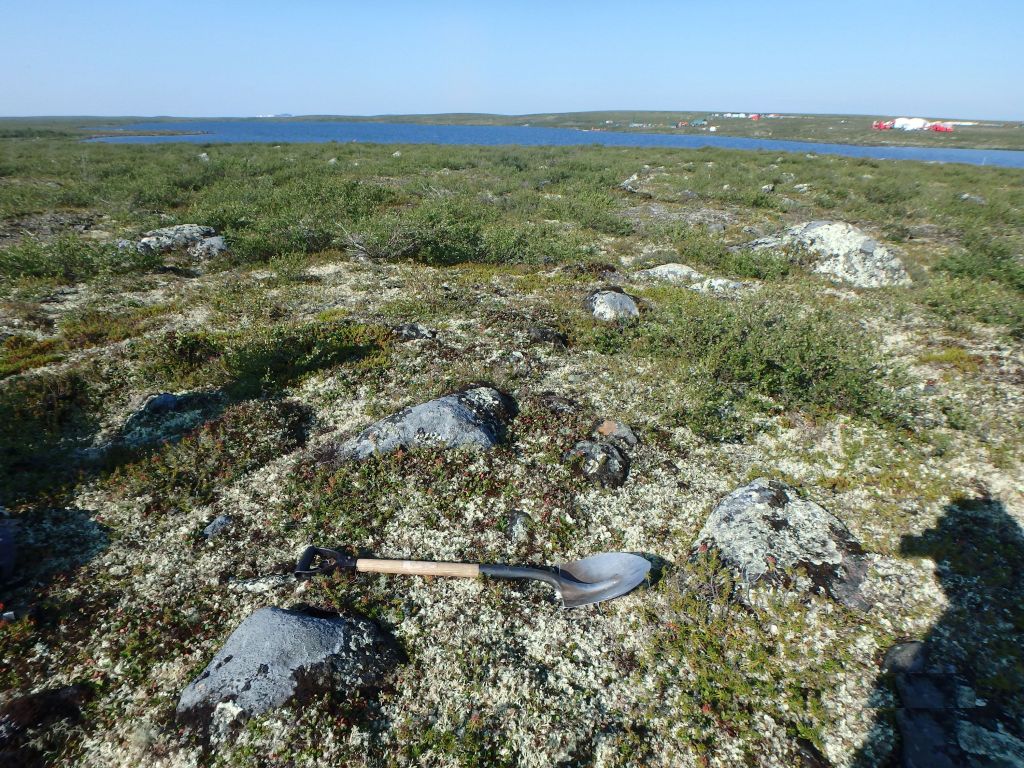
Using this set, they tested the surface soil at a second site in the Northwest Territories where they suspected kimberlite was present, and precisely located the topological outline and location of kimberlite buried tens of metres beneath the earth’s surface. This showed that indicators from one site could predict the location at another site. In future, exploration teams could build up a database of indicator species and test an unknown site to find out if kimberlite deposits are buried beneath the soil.
The researchers evaluated their technique against another technique known as geochemical analysis, which involves testing elements in the soil to identify the minerals beneath. The microbes were more precise when it came to identifying the location of buried ore.
“Microbes are better geochemists than us, and there are thousands of them,” said lead author Dr. Rachel Simister, who conducted the work as a postdoctoral researcher in the UBC department of microbiology and immunology (M&I). “You might run out of elements to sample, but you’ll never run out of microbes.”
The technique, born from work by a team including Phillips, Dr. Simister, Dr. Sean Crowe and the late professor Peter Winterburn, could catalyze the discovery of new kimberlite deposits. These rocks are known not only as potential stores of diamonds, but also for their ability to capture and store atmospheric carbon.
The technique has potential application across other metallic deposits. The team’s ongoing research shows similar results for identifying porphyry copper deposits.
“You could use this technique to find minerals to fuel a green economy,” said senior author Dr. Crowe, EOAS and M&I professor and Canada Research Chair in Geomicrobiology. “Copper is the most important critical element that we’ll need more of going forward.”
Dr. Crowe, along with Dr. Simister and co-author Dr. Craig Hart, co-owns spin-off company Discovery Genomics which provides these sequencing services to the mineral resource sector.
“This is exciting because it’s part of a growing recognition of the potential for using microbes at every stage of mining, from finding the minerals, to processing them, to returning sites to their natural states.” said Dr. Crowe. “Currently, microbial DNA sequencing requires specific expertise and is comparable in cost to other mineral exploration techniques, but this could change with industry adoption.”
PJXM News subscribes to UBC news releases and then shares them unedited via PJXM News.
PJXM News is an ad free, not-for-profit information news service.
 PJXM Prince George